
WorldJun 27, 2026
South Africa tells Washington it won't pick a side — and means it
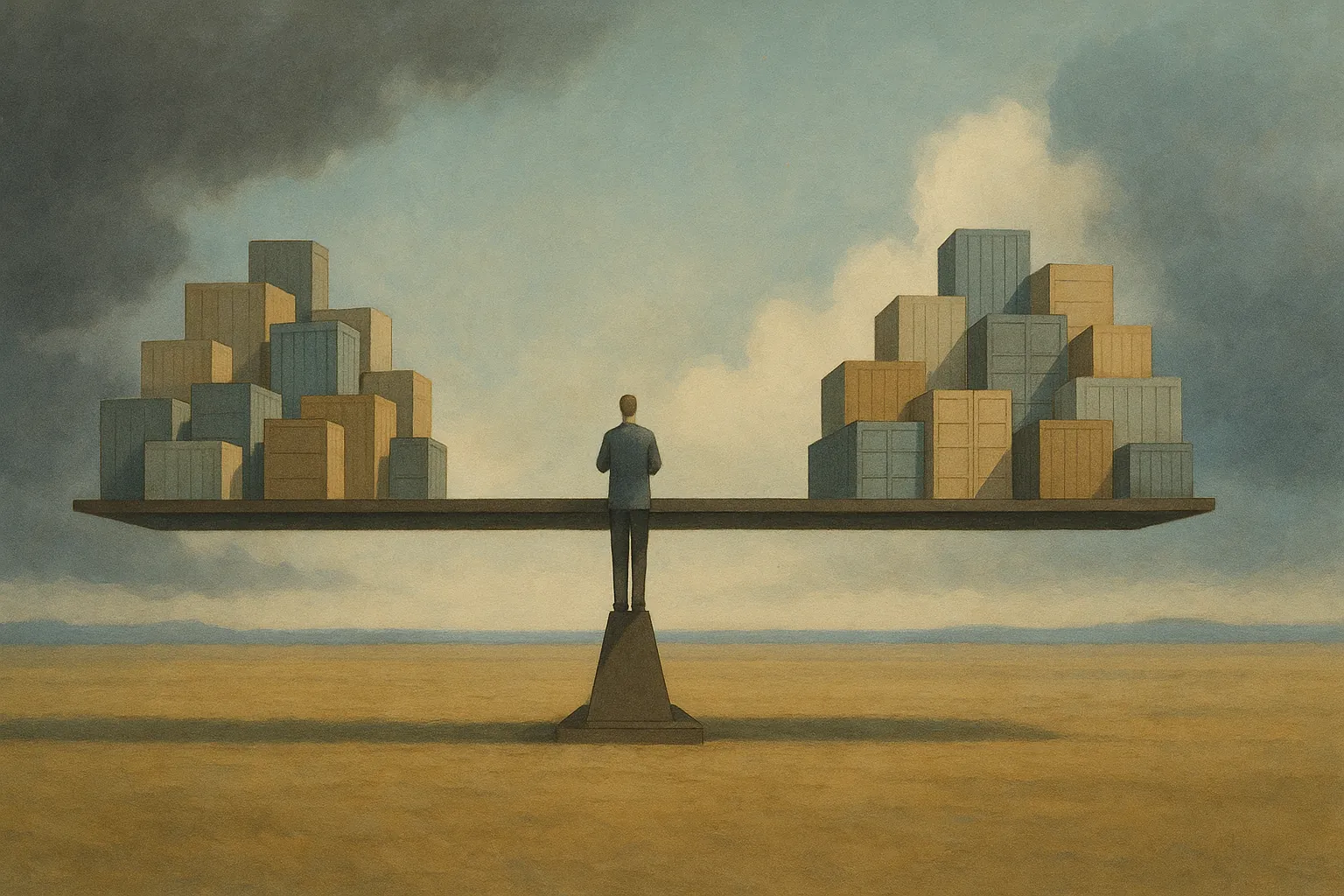
Ramaphosa's parliamentary defence of non-alignment is less about provoking the US than about protecting Pretoria's room to trade with everyone.
TL;DR
- President Cyril Ramaphosa used a parliamentary session to firmly defend South Africa's non-aligned foreign policy, telling the National Council of Provinces that Pretoria engages globally on the basis of sovereign equality, mutual respect and non-interference — and does not regard itself as having enemies [1][2][3][4].
- The immediate trigger was US Ambassador Leo Brent Bozell III's public criticism on X of South Africa's engagements with China and Iran, including Deputy President Paul Mashatile's visit to Beijing [4][6].
- DIRCO, South Africa's foreign ministry, separately insisted the country will not be pressured to take sides [5][7], a line Ramaphosa reinforced by saying South Africa seeks good relations with all nations [4].
- The story is real but thin: eight publishers covered it, yet only two core claims are corroborated across multiple sources, and every outlet is Tier-2 — no primary government transcript or US embassy statement is in the bundle.
- For a general reader, the stakes are modest and mostly economic: the spat touches trade tariffs and diplomatic positioning [4], but there is little here that changes anything overnight.
What happened
The factual core is narrow and largely undisputed across the eight sources in the bundle. During a question-and-answer session in the National Council of Provinces (NCOP) — South Africa's upper house — President Ramaphosa was pressed on the country's relations with China, Russia, and Iran, and on mounting tensions with the United States over trade tariffs and diplomatic positioning [4][6]. His answer was a full-throated defence of the non-aligned posture that has anchored post-apartheid South African foreign policy for three decades. He said the country's foreign policy is grounded in the Constitution and guided by principles of human rights, peace, multilateralism and a rules-based international order [4].
The most quotable line, carried by multiple outlets, was Ramaphosa's insistence that "We don't see ourselves as a country of enemies" [1][2][3]. He elaborated that South Africa is a country that seeks to be at peace with all other countries and have good relations with all [4]. The framing was deliberate: non-alignment, in Ramaphosa's telling, is not neutrality born of weakness but a strategic choice that enables engagement with global powers while protecting sovereignty, promoting dialogue and advancing national interests internationally [6].
The catalyst for the parliamentary questioning was not a closed-door démarche or a formal diplomatic note. It was a social-media post. US Ambassador Bozell III took to X to criticise South Africa's non-aligned stance, specifically referencing its engagements with China and Iran and pointing to Deputy President Mashatile's visit to Beijing [4][6]. The Department of International Relations and Cooperation (DIRCO) responded the following day, stating flatly that South Africa will not be pressured to take sides on its foreign policy [5][7]. The Citizen characterised this as a rebuke of the US envoy [7], though the substance of DIRCO's statement was a restatement of standing policy rather than a direct personal attack.
One source — The Frontier Post — attempts to connect the foreign-policy debate to domestic economic conditions, framing the question around unemployment, poverty and economic impact [8]. That framing is thinner than the diplomatic reporting and is not corroborated elsewhere in the bundle, but it gestures at the underlying logic: Pretoria's global alignments are not abstract. They are bound up with trade, investment, and the material conditions of a struggling economy.
What it actually means
The real story is not that South Africa is pivoting to anyone. It is that Pretoria is digging in against pressure to abandon a posture it considers foundational — and doing so at a moment when that posture is under unusual public strain from a US ambassador who chose to litigate policy on X rather than through diplomatic channels.
Non-alignment is not a Ramaphosa invention. It is the continuation of a posture that dates to Nelson Mandela's presidency, rooted in the anti-apartheid movement's own experience of receiving support from countries the West considered pariahs. When Ramaphosa says South Africa engages on the basis of sovereign equality and non-interference [1][2][3], he is invoking a principle that has domestic political resonance far beyond foreign-policy circles: the idea that a hard-won sovereignty should not be traded for great-power favour. This is why the response from DIRCO was so swift and categorical [5][7]. The government cannot afford to look as though it is folding to public American pressure, because doing so would undermine the very domestic legitimacy of its foreign policy.
What gives the story its edge is the manner of the American intervention. Ambassador Bozell's decision to post criticism on a public platform — referencing a sitting deputy president's bilateral visit to Beijing — is a departure from the usual choreography of diplomatic disagreement [4][6]. It forced Pretoria into a corner where silence would read as acquiescence. Ramaphosa's parliamentary answer was, in effect, a calibrated refusal to be cornered: he restated principles, invoked the Constitution, and declined to name the United States as an adversary. The line about not having enemies [1][2][3] is doing heavy lifting here — it is simultaneously a reassurance to Washington and a signal to Beijing, Moscow, and Tehran that Pretoria will not be embarrassed into cutting ties.
The trade dimension matters more than the diplomatic theatre suggests. The bundle references tensions with the United States over trade tariffs and diplomatic positioning [4], and The Frontier Post's attempt to link the foreign-policy debate to unemployment and poverty [8] — though thinly sourced — points at the structural reality. South Africa's economy is under severe strain. It cannot afford to lose preferential trade access to Western markets, but it also cannot afford to be shut out of BRICS-aligned commercial networks. Non-alignment, in this light, is less an ideological stance than an economic hedge. The truest indicator of South Africa's economic future, as one source puts it, lies in its shifting global alignments [8] — a claim that is editorialising but not unreasonable.
Hype deconstruction
This story has been covered by eight publishers, which sounds substantial. But the coverage is almost entirely Tier-2, and the corroboration is thin: only two of the twelve claims in the bundle are backed by more than one source [1][2][3]. Several outlets — apokalypsnu.com, Kenya Star, and RT — appear to be running versions of the same RT wire copy [1][2][3], which means the eight-publisher headline overstates genuine independent reporting. The real diversity of sourcing is closer to four or five distinct editorial efforts: RT's wire, IOL's parliamentary report, Jacaranda FM's DIRCO-focused piece, The Citizen's envoy-focused article, and The Frontier Post's economic framing.
The story is also not a rupture. There is no expelled ambassador, no recalled envoy, no severed trade agreement. The most dramatic language in the bundle — The Citizen's use of rebukes [7] — overstates what DIRCO actually did, which was to issue a restatement of existing policy in response to a social-media post. The diplomatic temperature is elevated, but the instruments of diplomacy remain intact.
Nor is this a story in which South Africa is secretly aligning with the so-called axis of China, Russia, and Iran. Ramaphosa's defence is explicitly that Pretoria maintains relations with all three in pursuit of national interests and constructive global engagement [4] — language that treats those relationships as instrumental, not ideological. The distinction matters. Engaging with Iran or Russia to advance trade and diplomatic positioning is categorically different from joining a security alliance, and nothing in the bundle suggests the latter.
Finally, the actionability for readers is near zero. This is a world story about diplomatic positioning. It does not move markets in the short term, it does not change consumer prices, and it does not require any behavioural response from an Australian reader. The coverage is amplified because it involves a US ambassador saying something provocative on social media — a format that travels well online — not because the underlying diplomatic event is consequential in itself.
Stakeholder landscape
Ramaphosa and the ANC government are the primary domestic beneficiaries of this moment. Standing up to public American criticism plays well across the South African political spectrum, including with constituencies that are otherwise hostile to the ANC. The invocation of the Constitution and a rules-based international order [4] is designed to frame non-alignment as principled rather than evasive.
Ambassador Bozell has, whether intentionally or not, handed Pretoria a rhetorical gift. By criticising South African policy on X rather than through diplomatic channels, he made it easy for DIRCO to frame the US as attempting pressure — a word that appears across the coverage [1][2][3][5][7] — and for Ramaphosa to occupy the high ground of sovereignty and non-interference. Whether the ambassador's post reflects a deliberate shift in US tactics or an undisciplined personal intervention is unclear from the bundle; no US embassy statement or State Department transcript is cited.
China, Russia, and Iran are passive beneficiaries. Ramaphosa's refusal to distance Pretoria from any of them — and his explicit framing of those relationships as pursuit of national interests [4] — normalises continued engagement at a time when Washington would prefer to isolate all three. Deputy President Mashatile's Beijing visit, which Bozell singled out [4][6], proceeds without diplomatic cost to South Africa.
South African opposition parties are largely absent from the bundle, which is notable. If the non-alignment debate were genuinely contentious domestically, one would expect parliamentary questioning to include criticism from opposition benches. The absence of such reporting may reflect thin sourcing rather than actual consensus, but it suggests the foreign-policy posture is not a live partisan fight inside South Africa.
Australian readers have a modest stake. Australia itself navigates a complex position between its primary security ally (the US) and its primary trading partner (China). South Africa's insistence that it can engage with all parties without picking sides is a more explicit version of the balancing act that successive Australian governments have attempted with greater and lesser success. The comparison is not exact — Australia's alliance obligations are deeper — but the structural tension is familiar.
Cross-layer implications
The non-obvious connection here is between diplomatic posture and trade architecture. South Africa is a BRICS member, and its refusal to take sides is not merely a foreign-policy preference but a positioning choice that affects its access to BRICS-aligned trade and finance mechanisms. When The Frontier Post links the foreign-policy debate to unemployment and poverty [8], it is gesturing — however imprecisely — at the reality that Pretoria's global alignments shape its economic options. If South Africa were to visibly align with Washington, it would risk friction within BRICS at a time when the bloc is expanding and offering alternative development finance. If it aligns too openly with Beijing or Moscow, it risks trade consequences with the US and EU, which remain significant export markets.
There is also a media-layer implication worth noting. The fact that this diplomatic friction was catalysed by a social-media post, and then amplified across eight outlets — several running near-identical wire copy — illustrates how platform diplomacy compresses the space for quiet negotiation. An ambassador's X post is not a diplomatic note, but it functions as one in the information environment, forcing a public response where a private one might once have sufficed. This is a structural shift in how diplomatic friction is generated and consumed, and it is not unique to the US-South Africa relationship.
What this means for you
For an Australian reader, the practical takeaways are limited but real. First, this is not a crisis. It is a diplomatic friction point amplified by social media and wire-copy repetition. If you see headlines suggesting a US-South Africa rupture, read them with scepticism — the bundle supports tension [4], not breakdown.
Second, watch the trade dimension, not the rhetoric. The bundle references trade tariffs as part of the US-South Africa tension [4]. If that escalates — if the US moves to alter trade preferences or if South Africa's BRICS engagement produces concrete trade deals that displace Western commercial interests — the story becomes economically significant. Until then, it is positioning.
Third, the non-alignment model is worth understanding because it is a template other middle powers are adopting or considering. Australia's circumstances differ — the ANZUS alliance and AUKUS make full non-alignment implausible — but the logic of engaging with all parties while protecting sovereignty [6] is a posture that resonates beyond South Africa. The more the US-China competition intensifies, the more middle powers will face versions of the choice Ramaphosa is resisting.
Uncertainty ledger
- No primary source is in the bundle. There is no transcript of Ramaphosa's NCOP remarks, no DIRCO press release, and no US embassy statement. Everything is filtered through Tier-2 reporting. A primary transcript could reveal nuance — or additional context — that changes the framing.
- The substance of Bozell's X post is paraphrased, not quoted. Multiple sources describe his criticism and his references to China, Iran, and Mashatile's Beijing visit [4][6], but none provides the verbatim text. The tone and specificity of the original post could matter.
- The trade-tariff claim is single-source. Only IOL references trade tariffs as part of the tension [4]. If tariffs are a live issue, that escalates the story's significance; if the reference is general, it does not.
- The Frontier Post's economic framing [8] is uncorroborated. Its claim that the truest indicator of South Africa's economic future lies in its shifting global alignments is editorial, not reported fact. It is plausible but should not be treated as established.
- Opposition and civil-society reaction is absent. Without reporting on whether Ramaphosa's defence drew criticism or support from other South African political actors, the domestic political stakes are unclear.
- US intent is unknown. Whether Bozell's post reflects a coordinated Biden-era (or successor) policy of public pressure on non-aligned governments, or an ambassador freelancing, cannot be determined from this bundle.
Bottom line
South Africa's defence of non-alignment is a principled restatement of long-standing policy, not a new provocation, and the US ambassador's decision to litigate it on X has given Pretoria an easy domestic win. The story is real but modest — eight publishers, thin corroboration, no primary sourcing, and no concrete consequence beyond diplomatic noise. Watch the trade dimension; ignore the rhetoric.
Sources
- RT. (26 June 2026). RT-Engels: South Africa rejects US pressure over foreign policy stance. apokalypsnu.com.
- Kenya Star. (26 June 2026). South Africa rejects US pressure over foreign policy stance.
- RT. (26 June 2026). South Africa rejects US pressure over foreign policy stance -- RT Africa.
- Hope Ntanzi. (26 June 2026). Ramaphosa defends South Africa's non-aligned foreign policy amid US tensions. IOL.
- Jacaranda FM. (25 June 2026). SA will not be pressured to take sides on its foreign policy: Dirco.
- South Africa Today. (26 June 2026). South Africa Defends Non-Aligned Foreign Policy Amid Diplomatic Spat With US Ambassador.
- Faizel Patel. (25 June 2026). South Africa rebukes US envoy, reaffirms non‑aligned foreign policy. The Citizen.
- The Frontier Post. (24 June 2026). Ramaphosa Foreign Policy: Unemployment, Poverty & Economic Impact in South Africa.