
AIApr 24, 2026
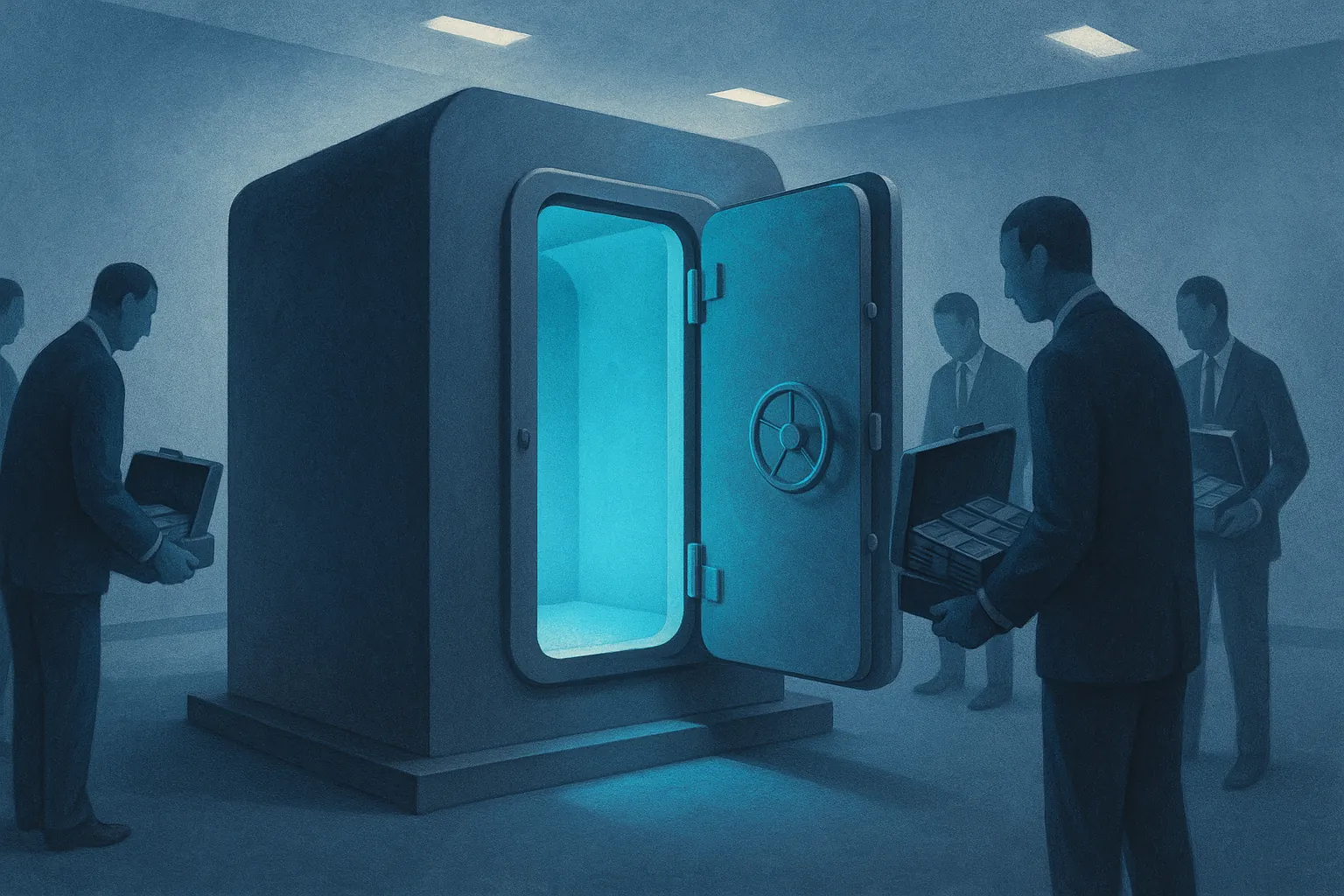
A bomb shelter for $100 million" — Altman says the quiet part
TL;DR On the Core Memory podcast (21 April), Sam Altman accused Anthropic of "fear-based marketing — they will sell you a bomb shelter for $100 million." The quote cleared a hundred million impressions in 48 hours and broke an informal truce between frontier labs. The accusation is: Anthropic's safety posture is not a
TL;DR
- On the Core Memory podcast (21 April), Sam Altman accused Anthropic of "fear-based marketing — they will sell you a bomb shelter for $100 million."
- The quote cleared a hundred million impressions in 48 hours and broke an informal truce between frontier labs.
- The accusation is: Anthropic's safety posture is not a research philosophy but a sales wedge aimed at buyers paying a premium for the reassurance.
- The audience Altman actually cares about is enterprise procurement and Washington — not technologists.
- OpenAI runs the same play with different framing. The admission the category exists is the load-bearing shift.
The thirteen words
On the Core Memory podcast on 21 April, Sam Altman was asked about Anthropic's safety pitch. He answered in thirteen words.
"They sell fear. They will sell you a bomb shelter for $100 million."
By Tuesday morning the clip had cleared a hundred million impressions across X, LinkedIn, and Threads. By Tuesday afternoon OpenAI engineers were quote-tweeting it with shrug emojis. By Wednesday the venture class was arguing about it at breakfast in San Francisco and Menlo Park.
It is the most important thing Altman has said in a year. Here is why.
The accusation, stripped
Strip the rhetoric and the claim is specific: Anthropic's safety posture is not a research philosophy; it is a sales wedge. Withholding Mythos, branding the lab as the careful one, talking constantly about catastrophic risk — in Altman's framing, these are not expressions of conviction. They are product marketing aimed at buyers who will pay a premium for the reassurance that they bought from the grown-ups.
Whether or not you believe him is almost beside the point. What matters is that the accusation has now been made, on the record, by the CEO of the one company whose opinion on this cannot be dismissed as lay commentary. Altman is not a journalist or a critic. He is the co-defendant.
Why it lands
Three reasons.
It's true enough to sting. Anthropic's safety messaging has always performed double duty — research signalling to policymakers, differentiation against OpenAI in the enterprise channel. Every CISO who has sat through a Claude pitch in the last eighteen months has heard the responsibility framing. Altman is describing, accurately, a thing that is really happening in sales rooms.
The timing is devastating. The quote landed in the same news cycle as reports that unauthorised users accessed Mythos — the model Anthropic said was too dangerous to release. If the bomb shelter was breached the week Anthropic finished selling it, the metaphor writes itself.
It breaks a truce. The two labs have exchanged barbs before, but always filtered — through proxies, research papers, carefully calibrated replies. This is the first time the CEO of one frontier lab has directly accused the other of bad faith, on the record, by name. Silicon Valley had rules about this. Those rules are gone.
What the quote is actually doing
Altman is not trying to convince technologists. Technologists already have opinions on this. He is speaking to two other audiences.
The enterprise buyer. Every Fortune 500 that chose Claude over GPT in the last year justified the choice partly on "they are more careful." Altman is handing those buyers' internal OpenAI champions a seven-word counter-pitch: they are not more careful, they are more expensive. That rebuttal will be used in hundreds of renewal conversations this quarter.
Washington. The Biden-era AI safety consensus — that the labs would self-police and government would defer — relied heavily on Anthropic's credibility as the lab that would slow down voluntarily. If that credibility is "marketing," the case for regulatory deference weakens. Altman, whose own company has more to gain from a looser regulatory environment than almost any other, is speaking to that audience whether he intended to or not.
The part Altman is not saying
OpenAI runs the same play. Not with safety framing, but with scale framing, alignment framing, mission framing. The nonprofit structure, the "for humanity" charter language, the carefully-staged Senate testimonies — these are also positioning. They are also real. Both things can be true.
What's new is that a frontier-lab CEO just admitted, out loud, that the other one is doing it — which is logically equivalent to admitting the category exists. That is the door that does not close again.
What this means for you
- AI vendor selection committee: discount the safety-brand premium by a notch. Not to zero — Anthropic's safety work is real — but lower than last month. Ask each bidder what they would not ship, why, and what it would cost them to ship it anyway. You'll learn more than from the marketing deck.
- AI policy: the self-regulation consensus is now contested at the level of the principals. Expect harder questions at the next Senate hearing, and both CEOs to testify with considerably more edge than in 2024.
- Investor in either lab: narrative risk just increased on both sides. OpenAI's willingness to break the truce suggests confidence in its product roadmap and creates exposure — the next Anthropic counter-attack will be sharper.
- End user of ChatGPT or Claude: no action. The tools are what they were yesterday. The change is in the adult conversation behind them.
What to watch next
Anthropic's response is the next data point. Dario Amodei can stay silent — the dignified play, but it leaves the accusation standing. He can rebut on substance — the hard play, requiring specifics about what Anthropic genuinely will not ship. Or he can hit back personally — the satisfying play, and a trap, because Altman wins any fight that moves from policy to personalities.
Reasonable base case: a considered written response within ten days, framed as "a reply to recent commentary," long on technical specifics, short on Altman's name. Anthropic's brand requires it. Whether it's believed is the question the next quarter answers.
Bottom Line
Thirteen words from Altman did what two years of critical essays could not: they made "AI lab safety positioning" a named commercial category, on the record, by a co-defendant. That framing will be cited in enterprise procurement decks for a year. The accusation is directional, not precise — but once a category has a name, it is evaluated like one. Every frontier lab's safety story now trades at a discount.
Written in the tradition of — E.
Sources
- Tier 1: Core Memory podcast — Sam Altman interview (21 April 2026); Axios — Anthropic coverage, week of 21 April 2026
- Tier 2: TechCrunch — Altman accuses Anthropic of fear-based marketing (21 April 2026); Forbes — Mythos access reporting (16–22 April 2026)