
HealthJun 27, 2026
The Access Gap: How Eli Lilly's Obesity Drug Became a Political Lightning Rod
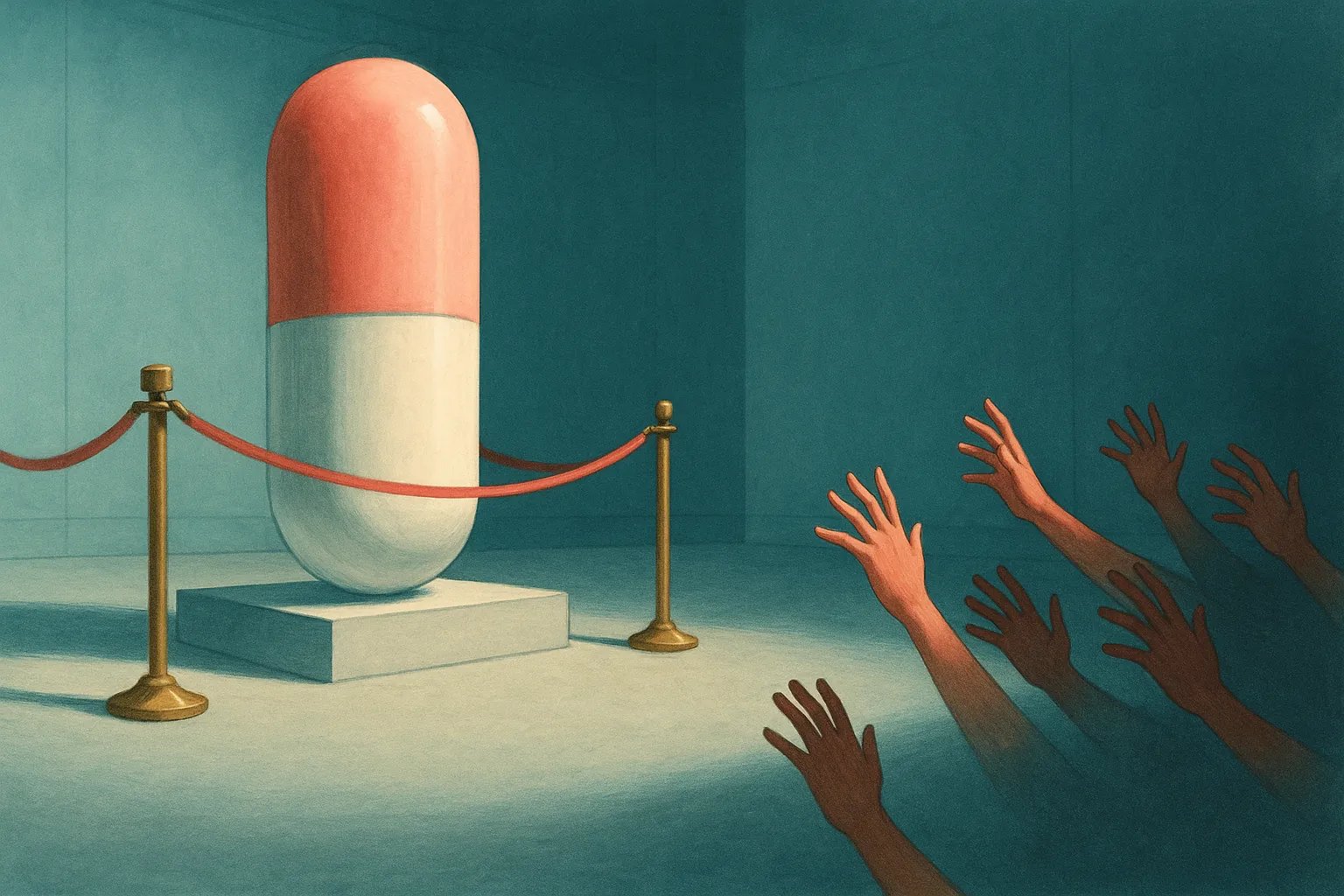
Democrats are demanding answers on who received special access to Eli Lilly's experimental retatrutide, while ordinary patients struggle to get GLP-1 weight-loss drugs covered by insurance.
TL;DR
- Democrats in the U.S. Senate are pressing the White House to explain who received special access to Eli Lilly's experimental obesity drug retatrutide, and how that access was granted [7][8].
- Patients like Deborah Finley, a 50-year-old single mother from California, illustrate the real-world consequences of inconsistent GLP-1 insurance coverage: she lost access to her weight-loss medication when her insurer stopped covering it [5].
- The controversy sits at the intersection of drug access, political influence, and a broader GLP-1 boom that is straining healthcare budgets and insurance formularies [4][5][7].
- KFF Health News reports that patients do have options when insurance denies GLP-1 coverage, but those options are limited and often depend on the specific medication and insurer [5].
What happened
Two distinct but related stories broke in late June 2026. The first, reported by STAT's Lizzy Lawrence on 25 June, concerns Democratic senators — led by Sen. Maggie Hassan — demanding that the White House explain who received special access to Eli Lilly's experimental obesity drug retatrutide, a next-generation GLP-1 receptor agonist still in clinical trials [7]. The questions are directed at Health and Human Services Secretary Robert F. Kennedy Jr., and they centre on whether political connections or favouritism played a role in granting certain individuals access to a drug that is not yet approved by the FDA [7].
The second story, reported the same day by STAT's Elaine Chen and Allison DeAngelis, digs into what they call "the mysterious case of Eli Lilly's obesity drug" — examining the circumstances around the special access and the broader implications for drug development and regulatory oversight [8]. The podcast-format report frames the situation as unusual and raises questions about transparency in how experimental drugs are distributed before approval [8].
Running parallel to these political and regulatory questions is a more grounded, patient-level story from KFF Health News, published 26 June by Sydney Lupkin [5]. It details the experiences of Americans trying to get GLP-1 weight-loss medications — drugs like Zepbound and Wegovy — covered by their health insurance. The report features Deborah Finley, a 50-year-old single mother from Lodi, California, who began worrying about her weight during the early days of the COVID-19 pandemic when she noticed that many of the people on ventilators or dying had obesity as a common factor [5]. Finley had been diagnosed with sleep apnea and nonalcoholic fatty liver disease, and she was prediabetic [5]. Her pulmonologist suggested bariatric surgery, but her insurer would not cover it [5].
Finley eventually found help through a GLP-1 medication, but when her insurance coverage changed, she lost access. "I was like: 'What am I going to do?'" she told KFF Health News [5]. She has since been trying to keep the weight off without the medication, saying: "Hopefully I can just continue keeping this weight off" [5].
What it actually means
The real story here is not a single scandal but a structural fault line in how experimental and approved drugs reach different populations. The Eli Lilly retatrutide access controversy exposes a gap between the world of political influence and the world of ordinary patients. On one side, unnamed individuals apparently received access to an unapproved, experimental obesity drug through channels that have prompted a Senate inquiry [7][8]. On the other side, patients like Deborah Finley cannot maintain access to already approved GLP-1 medications because insurers drop coverage or impose restrictive prior authorisation requirements [5].
This contrast matters because it reveals something about the American healthcare system that Australians should understand, given the growing interest in GLP-1 drugs here as well. The drugs work — they produce meaningful weight loss and, in the case of Ozempic, help manage type 2 diabetes. But access is determined less by medical need than by insurance design, employer decisions, and, apparently, political connections. The KFF Health News report makes clear that when insurance denies coverage, patients have options, but those options are constrained: they can appeal, they can switch medications, they can try manufacturer savings cards, or they can pay out of pocket — often thousands of dollars per year [5].
The political dimension adds another layer. Democrats pressing the White House on retatrutide access are effectively asking whether the normal rules of drug development — clinical trials, FDA review, equitable access — were bypassed for connected individuals [7]. This is not yet a confirmed scandal; it is an inquiry. But the fact that senators felt compelled to write letters and demand answers suggests they believe something irregular may have occurred [7].
Meanwhile, STAT's Elizabeth Cooney reported on 26 June that GLP-1 drugs may have applications beyond obesity and diabetes — specifically, pulmonary hypertension, a serious condition affecting the blood vessels in the lungs [4]. This expansion of potential indications will only increase demand, further straining the supply and coverage systems that are already failing patients like Finley [4][5].
Hype deconstruction
Several things this story is not. It is not a confirmed scandal involving the White House or RFK Jr. directly. The Democrats' letter is an inquiry, not a finding of wrongdoing [7]. The STAT reporting on the "mysterious case" is investigative but does not present conclusive evidence of illegality [8]. Readers should treat the political angle as an emerging story, not a settled one.
It is also not a story about GLP-1 drugs being dangerous or ineffective. The drugs have demonstrated real efficacy for weight loss and diabetes management, and the new research into pulmonary hypertension suggests the therapeutic potential may be broader still [4][5]. The problem is access, not efficacy.
Nor is it a story about a single villain. Eli Lilly is a pharmaceutical company doing what pharmaceutical companies do — developing drugs, running trials, and navigating the regulatory landscape. Insurers are making coverage decisions based on cost and formulary design. Politicians are asking questions, as is their role. The system as a whole produces the access gap, not any one actor.
Finally, this is not a story that has been widely corroborated. The retatrutide access angle is reported by STAT alone [7][8], and the patient experience angle comes from KFF Health News [5]. The claims are plausible and well-sourced within those outlets, but the broader picture — particularly the political access question — remains thin on independent confirmation.
Stakeholder landscape
Patients are the most directly affected. Deborah Finley's story is representative: people with obesity-related health conditions who found a treatment that worked, only to lose it when coverage was withdrawn [5]. For these patients, the gap between the drug's availability and their ability to obtain it is not abstract — it is a daily health concern.
Eli Lilly faces reputational risk from the retatrutide access inquiry, even if no wrongdoing is found [7][8]. The company is also navigating the commercial realities of a GLP-1 market that is growing rapidly but is constrained by coverage decisions and manufacturing capacity.
Insurers and employers are the gatekeepers. They decide which GLP-1 medications appear on formularies, what prior authorisation requirements apply, and whether coverage continues year to year [5]. Their decisions are driven by cost, and GLP-1 drugs are expensive — often US$1,000 or more per month (about A$1,500) without insurance.
Democratic senators, particularly Sen. Maggie Hassan, are using the retatrutide access question to probe the transparency of the drug access process under the current administration [7]. This is both a legitimate oversight function and a political exercise.
The White House and HHS, under Secretary Robert F. Kennedy Jr., must respond to the senators' inquiries and explain how access to an experimental drug was granted [7]. The response will shape public perception of whether the process was fair.
Cross-layer implications
One non-obvious connection: the 340B drug discount program, which Senator Bill Cassidy has introduced legislation to restrict [2], is part of the same broader struggle over drug pricing and access. The 340B program requires drug manufacturers to provide discounts to safety-net hospitals and clinics, and Cassidy's bill would place new limits on it [2]. If those limits pass, hospitals serving low-income patients may face further pressure on their ability to provide affordable medications — including, potentially, GLP-1 drugs. This connects the Eli Lilly access controversy to a wider policy fight: who gets access to expensive drugs, through what mechanisms, and at whose expense.
The pulmonary hypertension angle [4] also matters because it suggests GLP-1 demand will expand beyond obesity and diabetes into cardiovascular medicine. If GLP-1 drugs gain approval for pulmonary hypertension, the already strained supply chain and insurance coverage systems will face even greater pressure. This is not a distant concern; it is a near-term probability given the pace of research.
What this means for you
For Australian readers, the direct relevance is twofold. First, GLP-1 drugs like Ozempic and Wegovy are available in Australia, but access is governed by the Pharmaceutical Benefits Scheme (PBS), which has its own criteria and restrictions. The American experience — where coverage can disappear when an employer switches plans or an insurer changes its formulary — is a cautionary tale about what happens when drug access is tied to employment-based insurance rather than a universal system.
Second, if you or someone you know is taking a GLP-1 medication, the KFF Health News report offers practical guidance: understand your insurer's formulary, know your appeal rights, ask your doctor about alternative medications, and check whether manufacturer savings programs are available [5]. These options are American-specific in detail, but the principle applies universally: do not assume coverage is permanent, and have a backup plan.
For those following the political story, the key question is whether the Senate inquiry produces evidence of favouritism or simply confirms that the access process was unusual but legitimate [7]. Watch for the White House response and any subsequent hearings.
Uncertainty ledger
- Who received retatrutide access and how? The senators' letter asks this question, but no answer has been provided yet [7]. This is the central unresolved fact.
- Was any law or regulation broken? STAT's reporting does not allege illegality, and no regulatory body has announced an investigation [7][8].
- How widespread is the insurance coverage problem? Deborah Finley's case is illustrative but not necessarily representative of all patients [5]. More data on coverage denial rates and appeal outcomes would strengthen the picture.
- Will GLP-1 drugs gain approval for pulmonary hypertension? STAT reports on the potential, but it remains investigational [4]. Approval would significantly expand demand.
- Will Cassidy's 340B bill pass? The legislation has been introduced but not yet voted on [2]. Its fate will affect drug access for safety-net providers.
Bottom line
The Eli Lilly retatrutide access controversy and the GLP-1 coverage crisis are two faces of the same problem: a healthcare system where access to effective drugs is determined by factors other than medical need. Whether through political connections or insurance design, the people who benefit most from these medications are often the last to receive them.
Sources
- Meghana Keshavan. (26 June 2026). STAT+: Embryo editing advances reignite ethical debates. statnews.com.
- John Wilkerson. (25 June 2026). STAT+: Cassidy proposes bill to rein in 340B drug discount program. statnews.com.
- O. Rose Broderick. (26 June 2026). Supreme Court rules in weedkiller cancer case. statnews.com.
- Elizabeth Cooney. (26 June 2026). What is pulmonary hypertension and why would a new GLP-1 help?. statnews.com.
- Sydney Lupkin. (26 June 2026). Trouble Getting Weight Loss Drugs Covered by Insurance? Here's What To Know. kffhealthnews.org.
- Meghana Keshavan. (25 June 2026). STAT+: The China debate gets louder in Washington. statnews.com.
- Lizzy Lawrence. (25 June 2026). STAT+: Democrats press White House on who got special access to Eli Lilly's new obesity drug. statnews.com.
- Elaine Chen and Allison DeAngelis. (25 June 2026). The mysterious case of Eli Lilly's obesity drug. statnews.com.