
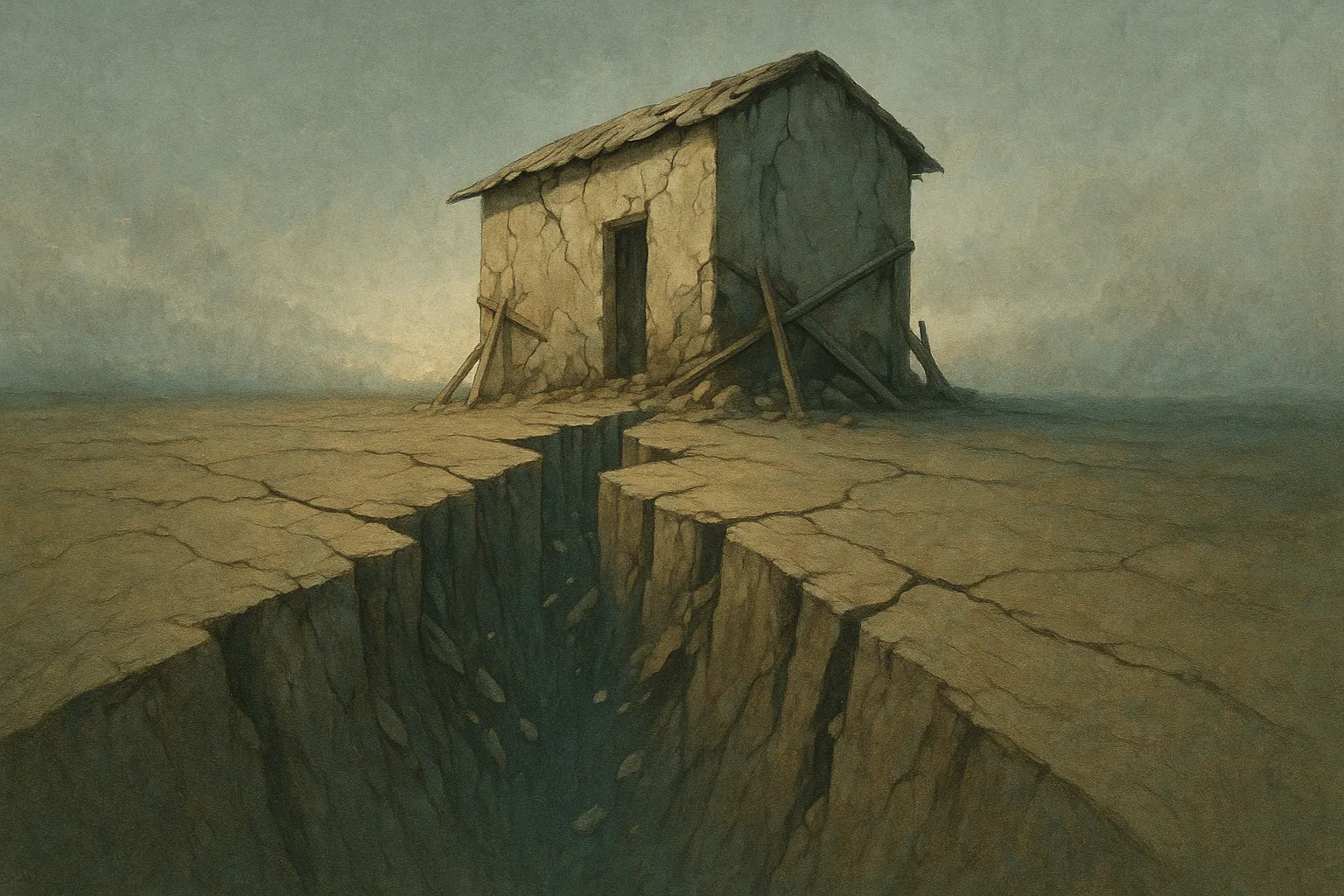
WorldJun 27, 2026
Venezuela's Twin Earthquakes: A Catastrophe on Top of a Crisis
At least 920 dead, hundreds trapped, and a country already reeling from political upheaval now faces its worst seismic disaster in over a century — with an international response that is only beginning to arrive.
TL;DR
- Twin earthquakes struck Venezuela on Wednesday, killing at least 920 people, injuring nearly 3,000, and leaving hundreds more feared trapped under collapsed buildings, with the coastal state of La Guaira the most devastated region [1][10][11].
- Interim president Delcy Rodríguez toured La Guaira and vowed to save "as many as possible," as international rescue teams began arriving — but public anger is mounting over the limited official response and scarce resources [9][10].
- The quakes occurred on a fault system similar to California's San Andreas, and geophysicists warn the seismic risk is not over [5].
- This is Venezuela's worst earthquake disaster in more than 125 years, compounding an already dire humanitarian crisis and arriving less than six months after former leader Nicolás Maduro was seized by US forces [4][10][12].
- Aid is on the way but its speed and effectiveness are uncertain, hampered by Venezuela's damaged infrastructure and political fragility [2].
What happened
On Wednesday, two major earthquakes struck Venezuela in quick succession — twin tremors that reduced multi-storey buildings to rubble in the coastal state of La Guaira, the worst-hit area, and sent shockwaves through a country already buckling under years of political and humanitarian strain [6][8][9]. The confirmed death toll has reached at least 920 people, according to BBC reporting and The Guardian, making this the deadliest seismic event in Venezuela in more than 125 years [1][10]. Interim president Delcy Rodríguez had earlier stated that nearly 3,000 people were injured, a figure that underscores the sheer scale of the catastrophe [11]. Hundreds more remain feared trapped beneath the debris of collapsed structures, as families desperate for news of missing loved ones wait at the edges of ruined buildings [1][9].
The destruction in La Guaira is particularly severe. Aerial footage broadcast by the BBC reveals entire blocks flattened or critically damaged, with multi-storey residential buildings reduced to concrete pancakes [8]. BBC reporters on the ground in La Guaira documented a landscape of devastation, where first responders and volunteers — often working with minimal equipment — have been pulling survivors from the rubble by hand [6][7]. In one widely circulated moment, a woman was extracted alive from beneath a collapsed building, a rare flash of hope amid an otherwise grim recovery operation [7].
Rodríguez, who has served as interim president following the seizure of former leader Nicolás Maduro by US forces less than six months ago, toured La Guaira and declared that foreign search and rescue teams were beginning to arrive [10][12]. She vowed that the government would work to save "as many as possible" — a phrase that, while expressing intent, has done little to quell growing public anger over what many Venezuelans see as a painfully slow and under-resourced official response [9][10]. China's president Xi Jinping has said Beijing is ready to provide assistance, though the specifics of that aid remain unclear [11].
What it actually means
The real story here is not simply that two earthquakes hit Venezuela. It is that two earthquakes hit a country that was already in a state of systemic failure — and that the disaster has exposed, in the most brutal way possible, how hollowed-out state capacity has become. Venezuela's humanitarian crisis did not begin with these tremors. As Julia Buxton, a professor at Liverpool John Moores University, explains, the earthquakes add a "tragic new layer" to a pre-existing emergency that has driven millions of Venezuelans from their homes and left those who remain struggling with food insecurity, collapsed healthcare, and unreliable infrastructure [4]. When a country's hospitals are already short of basic supplies, when its emergency services are underfunded and undermanned, and when its political leadership is barely six months into an interim government following the dramatic removal of its predecessor, the arrival of a major natural disaster is not just a crisis — it is a compounding catastrophe.
The death toll itself tells a story of vulnerability. The figure of 920, reported by both the BBC and The Guardian, represents confirmed deaths as of 26 June [1][10]. The earlier Guardian live blog reported 589 confirmed dead, indicating that the toll was still climbing rapidly as bodies continued to be recovered from collapsed buildings [11]. The nearly 3,000 injured figure cited by Rodríguez suggests a healthcare system now facing a surge it is fundamentally unequipped to handle [11]. In a country where medical supplies were already scarce and many hospitals were operating at reduced capacity before the quakes, the influx of thousands of injured people is a test that the system may simply fail.
The geological dimension adds another layer of concern. Sylvain Barbot, a professor of earth sciences at USC Dornsife, explains that the earthquakes occurred on a fault system similar to California's San Andreas — a strike-slip fault where tectonic plates grind horizontally past one another [5]. This is significant because it means the seismic threat is not a one-off event. Barbot warns that "the risks aren't over yet," raising the possibility of aftershocks or further major ruptures that could destabilise already damaged structures and complicate rescue efforts [5]. For rescue teams working in La Guaira, the ground beneath their feet is not yet safe.
The political context is impossible to ignore. Venezuela's interim government, led by Rodríguez, is itself a product of extraordinary circumstances — the seizure of Maduro by US forces less than six months ago was an unprecedented event that left the country in a state of profound political uncertainty [12]. The BBC notes that the earthquake is a "devastating blow to Venezuela at a time of uncertainty," and that characterisation is precise [12]. A government that has barely had time to establish its legitimacy and administrative machinery is now being asked to manage one of the worst natural disasters in the country's history. The anger growing among survivors is not merely about the speed of bulldozers or the number of rescue workers; it is about a population that has watched its institutions erode over years and now sees, in the rubble of La Guaira, the physical manifestation of that erosion [9].
Hype deconstruction
There are several ways this story could be inflated or misread, and it is worth being clear about what this disaster is not.
First, this is not a story of a government deliberately neglecting its people in the way that, say, Myanmar's military regime was accused of blocking aid after its 2023 earthquake. The anger in Venezuela is real and documented — survivors and families have expressed frustration at the limited official response — but the interim government under Rodríguez is actively appealing for and accepting international help, and foreign teams are arriving [9][10]. The shortfall appears to be one of capacity, not of will. Venezuela's state institutions have been degraded by years of economic collapse, sanctions, political turmoil, and the recent upheaval surrounding Maduro's removal. The government may genuinely want to mount a massive rescue operation and simply lack the heavy equipment, trained personnel, and logistical coordination to do so at the scale required. Conflating incapacity with malice would distort the story.
Second, the death toll figure of 920 should be understood as a snapshot in time, not a final number. The discrepancy between the Guardian's earlier live blog figure of 589 and the later reported 920 confirms that the toll was still rising as recovery operations continued [10][11]. It is likely to climb further as more bodies are recovered and as some of the hundreds feared trapped are confirmed dead. Reporting the 920 figure without that context risks presenting a static picture of a dynamic and worsening situation.
Third, while the comparison to the San Andreas fault is geologically accurate and useful for general readers trying to understand the mechanism, it should not be stretched into a prediction that Venezuela is now facing California-level seismic frequency. Barbot's analysis is clear that the fault is similar in type to the San Andreas, not that Venezuela faces the same level of ongoing seismic hazard as the western United States [5]. The risk of aftershocks is real, but the framing should remain grounded in what the geophysical evidence actually supports.
Finally, the arrival of international rescue teams is a positive development, but it should not be presented as a solution already in motion. Dulce Suarez, assistant director of the Academy for International Disaster Preparedness at Florida International University, notes that while aid is on the way, "it's not clear how quickly it can get there" [2]. Venezuela's damaged infrastructure, political fragility, and the sheer scale of destruction in La Guaira all present logistical barriers that mean help arriving does not equal help reaching the people who need it most. The gap between pledged assistance and delivered assistance is where this story will be won or lost.
Stakeholder landscape
The most immediately affected stakeholders are the residents of La Guaira and surrounding areas, who have lost homes, family members, and any remaining sense of stability. Among them are people like the mother who died saving her daughter — a story reported by the BBC that humanises the staggering numbers and reminds us that behind every statistic is an individual catastrophe [3]. Héctor Bello, writing on social media, paid tribute to his partner with the words "you gave your own life for our daughter," a detail that captures the intimate devastation running through entire communities [3].
The interim government under Delcy Rodríguez is both a stakeholder and a subject of public scrutiny. Rodríguez's public statements — touring La Guaira, vowing to save as many as possible, confirming the arrival of foreign teams — are the actions of a leader trying to demonstrate competence in a moment of extreme pressure [10]. But the anger documented by The Guardian's reporters on the ground suggests that many Venezuelans are not satisfied with what they are seeing [9]. For an interim government still establishing its legitimacy, the perception of an inadequate disaster response could have political consequences that extend well beyond the immediate crisis.
International actors are also positioning themselves. China's Xi Jinping has publicly stated Beijing's readiness to provide assistance, a gesture that fits China's broader pattern of engaging with Venezuela as a strategic partner in Latin America [11]. The United States, which seized Maduro less than six months ago, has a complex relationship with the current interim government, and the speed and scale of any US aid will be read through a political lens. International rescue teams arriving from various countries represent not just humanitarian assistance but also a form of soft-power diplomacy in a country that has become a geopolitical fault line of its own.
Aid organisations and nonprofits involved in local rescue and recovery are critical stakeholders, and Suarez's guidance — that those who want to help should donate cash to nonprofits involved in local efforts — points to the practical channel through which international solidarity can be most effective [2]. Cash donations allow organisations on the ground to purchase exactly what is needed, when it is needed, rather than dealing with the logistical burden of unsolicited material donations that may not match the actual requirements.
Cross-layer implications
One non-obvious connection worth drawing is between this disaster and the broader question of climate and geological risk in politically fragile states. Venezuela is not the first country to face a major natural disaster while its political institutions are in flux, and it will not be the last. The pattern is familiar: a state weakened by conflict, economic collapse, or political upheaval is hit by an earthquake, flood, or storm, and the disaster exposes the depth of institutional decay in ways that years of reporting on governance failures could not. The earthquakes in La Guaira are, in a sense, a stress test — and the early results suggest that Venezuela's state capacity is failing that test.
This has implications beyond Venezuela's borders. If the interim government cannot manage the rescue and recovery phase effectively, the humanitarian fallout — displacement, disease outbreaks, food insecurity — will spill into neighbouring countries, particularly Colombia and Brazil, which have already absorbed millions of Venezuelan migrants in recent years [4]. A failed recovery could accelerate a new wave of migration, placing additional strain on regional infrastructure and international aid budgets.
There is also a geological risk dimension that connects to urban planning across Latin America. Barbot's analysis of the fault system suggests that the tectonic setting along Venezuela's coast is capable of producing significant earthquakes, and the collapse of multi-storey buildings in La Guaira raises questions about building codes, construction standards, and enforcement — questions that are relevant not just in Venezuela but across seismically active regions of Central and South America [5][8]. The images of flattened apartment blocks are a reminder that earthquake risk is not just about geology; it is about what we build on top of that geology and whether the structures can withstand the forces the earth delivers.
What this means for you
For most readers, particularly those in Australia, the direct practical implication of this story is limited — but the humanitarian imperative is real. If you are moved to help, the most effective action is to donate cash to reputable nonprofits involved in local rescue and recovery efforts in Venezuela, as Suarez advises [2]. Cash donations are faster, more flexible, and more useful than material goods, which require shipping, customs clearance, and sorting — all of which cost time and money that disaster zones cannot spare.
Beyond the immediate question of charitable giving, this story is a reminder of how interconnected political stability and disaster resilience truly are. The countries best able to survive major earthquakes, floods, and storms are those with functioning institutions, well-funded emergency services, and construction standards that are actually enforced. Venezuela's tragedy is a case study in what happens when those foundations are absent — and it is a lesson that applies to any society that allows its institutional capacity to degrade.
For readers who follow geopolitics, the response to this disaster — which countries send aid, how quickly, and with what conditions — will be a signal of how the international community intends to engage with Venezuela's interim government. Watch the gap between announced assistance and delivered assistance. That gap will tell you more about the political reality than any press conference.
Uncertainty ledger
Several critical questions remain unresolved, and the analysis above would shift if any of them are answered differently than expected:
- The final death toll is not yet known. The figure has already risen from 589 to 920 in a single day of reporting, and hundreds remain feared trapped [10][11]. The true number could be significantly higher once all rubble is cleared, and it could take weeks to establish a final count.
- The scale and speed of international aid delivery is unclear. Suarez notes that aid is on the way but its arrival time is uncertain, and the logistical challenges of operating in a country with damaged infrastructure and political fragility are significant [2]. Whether the pledged assistance — including from China — translates into effective on-the-ground support remains to be seen.
- The risk of further seismic activity is real but unquantified. Barbot warns that the risks are not over, but the specific probability of major aftershocks or additional ruptures on the fault system is not detailed in the available sources [5]. If a significant aftershock strikes La Guaira while rescue operations are underway, the consequences could be catastrophic.
- The political fallout for the interim government is unpredictable. Public anger is growing, but it is not yet clear whether this will translate into organised political opposition, protests, or a shift in support for Rodríguez's government [9]. The interim government's legitimacy was already fragile; a perceived failure in disaster management could accelerate instability.
- The single-source claim that the quakes come "less than six months" after Maduro's seizure by US forces is reported only by the BBC [12]. While this is a Tier-1 source, the specific framing and its implications for the current government's capacity to respond would benefit from corroboration and deeper analysis.
Bottom line
Venezuela's twin earthquakes are a natural disaster made far worse by a man-made one: the years of political and institutional decay that left the country unable to respond at the scale the moment demands. The interim government is trying, international help is arriving, and individual acts of courage — a mother shielding her daughter, volunteers pulling strangers from rubble — are real and worthy of recognition. But the structural failure is the story, and until Venezuela's institutions are rebuilt, the next disaster will find the country just as exposed.
Sources
- bbc.co.uk. (26 June 2026). Venezuela earthquakes kill 920 people as families desperate for news.
- Dulce Suarez, Assistant Director of the Academy for International Disaster Preparedness, Florida International University. (26 June 2026). Aid is on the way after Venezuela's earthquakes, but it's not clear how quickly it can get there. theconversation.com.
- bbc.co.uk. (26 June 2026). Mother dies saving daughter in Venezuela earthquakes.
- Julia Buxton, Professor in the School of Law and Justice Studies, Liverpool John Moores University. (26 June 2026). Venezuela earthquakes add tragic new layer to the country's humanitarian crisis. theconversation.com.
- Sylvain Barbot, Professor of Earth Sciences, USC Dornsife College of Letters, Arts and Sciences. (26 June 2026). Venezuela's deadly earthquakes happened on a fault similar to the San Andreas, and the risks aren't over yet – a geophysicist explains. theconversation.com.
- bbc.co.uk. (26 June 2026). Watch: BBC reports from La Guaira, one of Venezuela's worst-hit areas.
- bbc.co.uk. (26 June 2026). Moment woman pulled from rubble alive after Venezuela earthquake.
- bbc.co.uk. (26 June 2026). Aerial footage reveals destruction in coastal Venezuela.
- Camille Rodríguez Montilla in La Guaira, Clavel Rangel in Caracas, Tom Phillips in Rio de Janeiro and Jane Clinton. (26 June 2026). Survivors tell of 'brutal and fast' Venezuela quake as hunt for survivors goes on. theguardian.com.
- Clavel Rangel in Caracas and Tom Phillips in Rio de Janeiro. (26 June 2026). Venezuela quake death toll reaches 920 as interim president vows to save 'as many as possible'. theguardian.com.
- Aneesa Ahmed and Sundus Abdi (now),Taz Ali (earlier). (26 June 2026). Venezuela earthquakes: 589 confirmed dead so far as international rescue teams arrive – as it happened. theguardian.com.
- bbc.co.uk. (26 June 2026). Earthquake is devastating blow to Venezuela at time of uncertainty.